
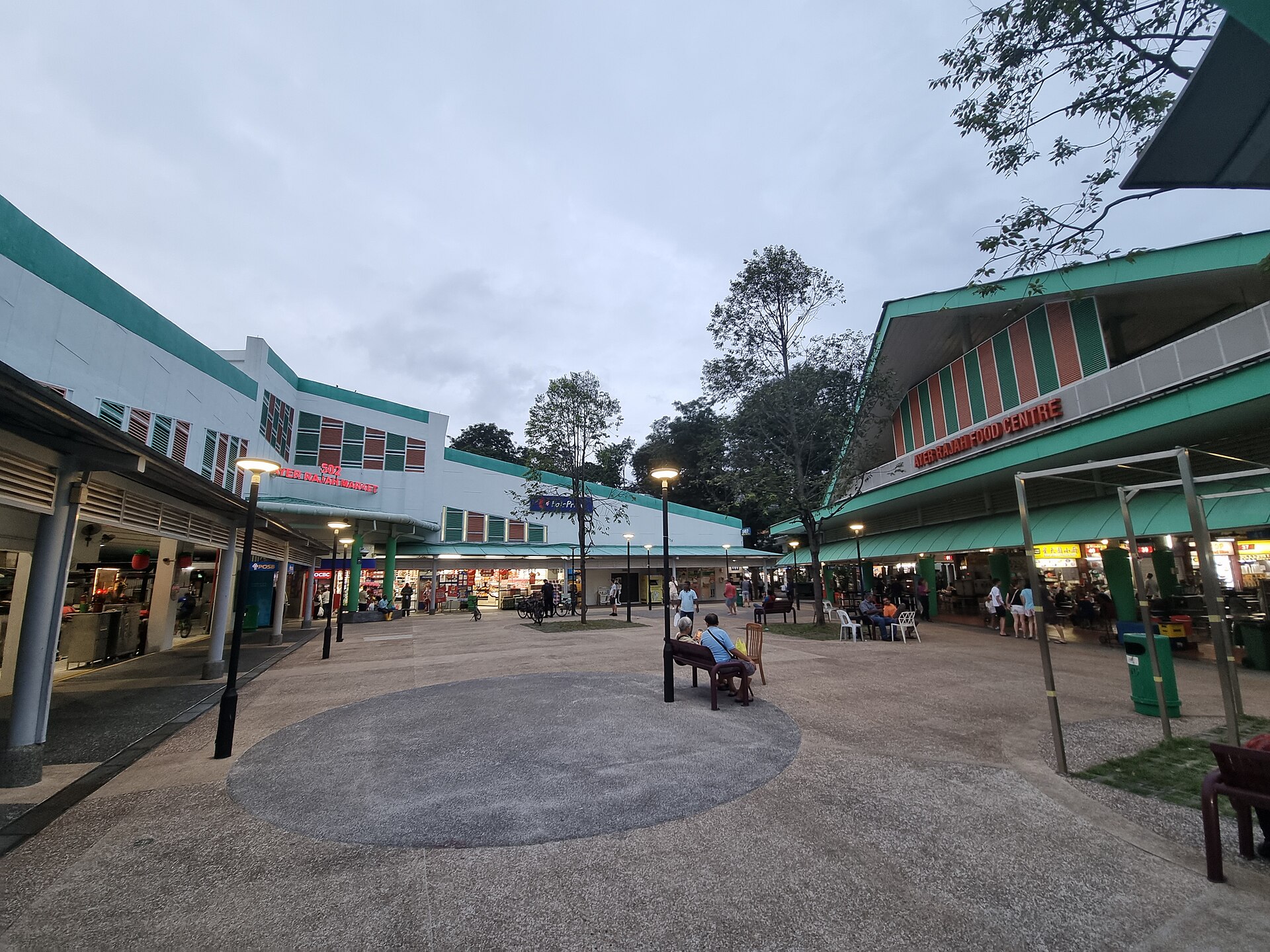
Photo: Kbseah / CC BY-SA 4.0 via Wikimedia Commons
Hawker centres are where Singapore really eats — cheap, brilliant and a little chaotic. Here is how they work, what to order first, and the centres worth building a meal around.
You can eat very well in Singapore’s restaurants, but if you only do that you will miss the point. The country’s real food culture lives in its hawker centres — open-air food courts where dozens of small stalls, many of them family-run for generations, cook a single dish each and cook it brilliantly. A plate of food that would headline a menu elsewhere costs around SGD 5 to 8 here. UNESCO added Singapore’s hawker culture to its list of intangible cultural heritage, and one meal in will tell you why.
If you have never been to one, the first visit can feel a little chaotic. Here is everything you need to walk in like you have done it before.
How a hawker centre works
There is no host, no menu for the whole place, and no table service. You walk the aisles, look at what each stall is selling (the queues are a reliable guide — locals line up for the good ones), order and pay at the stall, and either wait for it or give them a table number to bring it over. Then you do it again at the next stall for your next dish. Drinks usually come from a separate stall.
The one local custom to know: people reserve tables by placing a packet of tissues on a seat. This is called “choping”. If you see a tissue packet on an empty chair, the table is taken — and yes, you are allowed to do it too.
A few more practical notes: bring some cash (many stalls take cards or QR payments now, but not all), eat at the peak times of roughly noon and 6–8pm if you want the full, buzzing experience, and clear your tray when you are done — it is now expected, with small fines in place for leaving a mess.
Eating well on a booked trip
We are a Singapore operator rather than a restaurant guide, but where you plan to eat changes which area you should stay in and how the transfers are arranged. Both are things we set up when we build the trip.
What to order first
Singaporean food is a delicious collision of Chinese, Malay, Indian and Peranakan influences. If it is your first time, build your meals around these:
- Hainanese chicken rice — poached chicken with rice cooked in chicken stock, served with chilli and ginger. Often called the national dish, and the benchmark by which you will judge everything else.
- Chilli crab — the famous one: crab in a sweet-savoury, mildly spicy tomato gravy. Order the fried mantou buns to mop up the sauce. This is usually a seafood-restaurant dish rather than a hawker one, but no food list is complete without it.
- Laksa — rice noodles in a rich, coconut-and-spice prawn broth. Comforting and a little addictive.
- Char kway teow — flat rice noodles stir-fried over high heat with prawns, cockles, egg and Chinese sausage. Smoky and indulgent.
- Satay — skewers of grilled marinated meat with a peanut dipping sauce. The classic shared starter.
- Hokkien mee, bak chor mee, wonton mee — a whole family of noodle dishes worth working through over several visits.
- Roti prata — a crisp, flaky fried flatbread served with curry, on the Indian side of the spectrum. Great any time of day.
- Kaya toast with soft-boiled eggs — the local breakfast: toast spread with sweet coconut-egg jam, eggs cracked into a saucer with soy sauce and white pepper, and a strong kopi (coffee) on the side.
Pace yourself. The joy of a hawker centre is ordering three small things across three stalls rather than one big plate — so go with an empty stomach and a willingness to share.
The hawker centres worth seeking out
There are well over a hundred across the island, but these are the ones visitors return to:
- Maxwell Food Centre (Chinatown) — central, beginner-friendly, and home to one of the most famous chicken rice stalls in the country. A perfect first hawker meal.
- Lau Pa Sat (in the financial district) — housed in a beautiful Victorian cast-iron pavilion. In the evening, the adjoining Boon Tat Street closes to traffic and fills with smoke and satay grills — the “Satay Street” experience is a Singapore rite of passage.
- Chinatown Complex Food Centre — the biggest hawker centre in the city, sprawling and wonderfully local, with hundreds of stalls including one that famously earned a Michelin nod.
- Old Airport Road Food Centre — a favourite of serious eaters, a little off the tourist track, and packed with long-standing stalls. Go here when you want to eat like a regular.
- Tiong Bahru Market — set in one of the city’s most charming old neighbourhoods, great for a morning of breakfast hawker food followed by a wander through the art-deco streets.
- Newton Food Centre — the most tourist-oriented of the bunch (you may recognise it from Crazy Rich Asians), lively at night and convenient, though prices run a little higher.
Eating with dietary needs
Vegetarians and those who eat halal are well looked after — most centres have clearly signed Muslim and vegetarian stalls, and Indian and Malay stalls offer plenty of meat-free and halal-certified options. When in doubt, ask; hawkers are used to the question.
The best way to understand Singapore is to eat your way across it, one small plate at a time. Do that, and the city stops being a list of attractions and starts feeling like a place. When you are ready to put a trip together, see our 3-day Singapore itinerary for where these meals fit, check the best time to visit, or browse our Singapore tour packages.



Comments (0)
Be the first to comment.
Write a Comment