
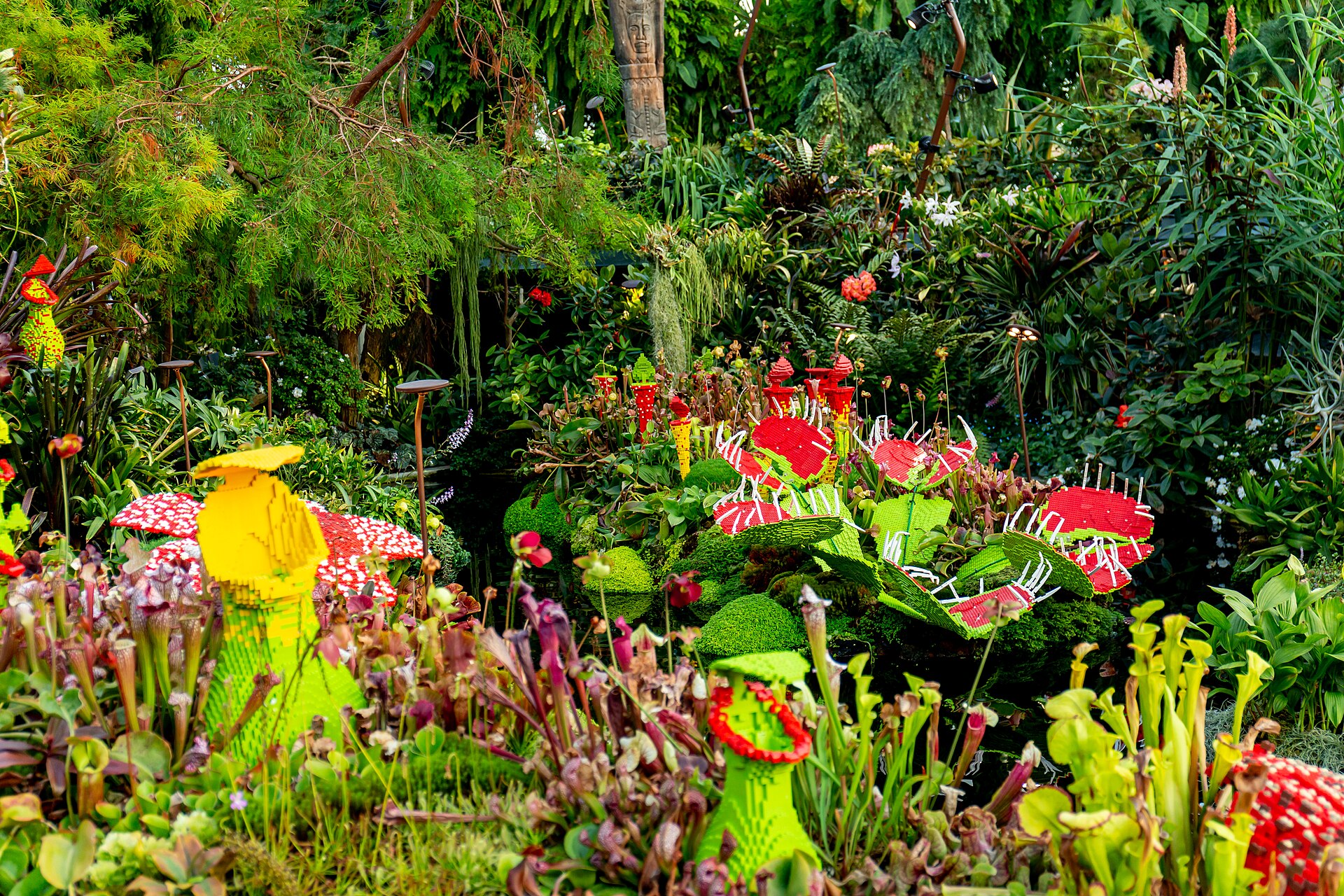
Photo: Balon Greyjoy / CC0 via Wikimedia Commons
When to travel to Singapore from Suriapet: weather, crowd levels and the months when fares from Hyderabad are at their lowest.
Singapore sits about one degree off the equator, so the honest answer for travellers from Suriapet is that there is no bad time to go — only more expensive and less expensive times. Temperatures sit between 25°C and 32°C every month of the year, and it rains, briefly and hard, in all of them.
Month by month
| Period | Weather | Crowds and fares |
|---|---|---|
| February–April | The driest, most comfortable stretch | Moderate — the best overall balance |
| May | Hot and humid | Quiet, fares soften |
| June–July | Warm, short sharp showers | Peak — Great Singapore Sale plus Indian school holidays |
| August | Warm | Busy around National Day (9 August) |
| September | Warm, occasional haze | Value window, though the F1 night race spikes hotels |
| October | Warming, wetter | Quiet before Deepavali |
| November–December | Wettest months | Rising to Christmas and New Year peak |
| January | Wet early, drying late | Cheapest after the first week |
The cheapest windows
From Hyderabad, the two reliable value windows are mid-January to early February and September. Both fall between Indian holiday peaks, and both have perfectly good weather.
The expensive windows are equally predictable: Indian school summer holidays, Diwali week, and Christmas to New Year. If your dates are fixed to those, book eight to ten weeks out rather than hunting for a deal that will not appear.
Does the rain matter?
Less than you would think. Singapore rain is usually a heavy 30–60 minute burst rather than a washout, and the city is built for it — sheltered walkways, malls and MRT links mean a shower rarely ends a day. The wetter months are worth avoiding for a beach-heavy Sentosa trip, and irrelevant for a city-and-attractions one.
Events worth planning around
- Chinese New Year (Jan/Feb) — Chinatown at its best, but some businesses close
- Great Singapore Sale (Jun–Jul) — genuine discounts, peak crowds
- National Day (9 August) — spectacular, and hotels near Marina Bay sell out
- Formula 1 night race (Sept) — the single biggest hotel price spike of the year
- Deepavali (Oct/Nov) — Little India lit up, and familiar for Indian travellers
What the weather actually means day to day
Numbers first, because they barely move: daytime highs sit at 30–32°C almost every month, nights drop to 24–26°C, and humidity runs 70–90%. There is no cool season, no dry season in the way India has one, and no month where you need warm clothing outdoors.
What that means in practice is that the heat, not the rain, shapes your day. Plan indoor or shaded things for 12pm to 3pm — the conservatories, a museum, a mall, lunch — and save walking for early morning and after 5pm. Visitors who ignore this are the ones who describe Singapore as exhausting.
The rain arrives as short violent bursts rather than all-day drizzle, usually late afternoon. Thirty to sixty minutes later it is over and the streets are dry. Carry a compact umbrella and do not rearrange a trip around a forecast.
What to pack
- Light cotton and linen only — nothing you would wear in a Delhi winter
- A compact umbrella or light rain shell, useful in every month
- Genuinely comfortable walking shoes; you will average 10–15 km a day without noticing
- A light layer for indoors — Singapore air-conditioning is aggressive, especially on the MRT and in malls
- Sunscreen and a refillable water bottle; tap water is safe and drinking fountains are common
- A universal adapter — Singapore uses the UK-style three-pin Type G plug, not the Indian round-pin
Browse Singapore packages and tell us your month — we will flag whether you are booking into a peak before you commit.
Practical things worth knowing before you fly
Staying connected
Buy a tourist SIM at Changi on arrival — Singtel, StarHub and M1 all sell them in the arrivals hall from about SGD 12 for a week with generous data. An eSIM bought before you leave India works just as well and saves the queue. Free public wi-fi is widespread but requires a local number to register, which is the catch that sends most people to the SIM counter anyway.
Language
English is an official language and the working language of the whole country — every sign, menu, ticket machine and announcement is in English. Tamil is also an official language, and Little India operates largely in Tamil and Hindi. Communication is genuinely not a barrier for Indian travellers.
Laws that surprise visitors
Singapore enforces rules that are unusual by Indian standards, and enforcement is real rather than nominal:
- Chewing gum cannot be imported or sold. Bringing a packet in your bag is a genuine problem
- E-cigarettes and vapes are completely banned — possession alone carries heavy fines, and this catches out more Indian travellers than anything else on this list
- Smoking is prohibited in most public places; use the marked yellow-box zones
- Eating and drinking on the MRT is fined, including water
- Jaywalking is an offence — use the crossings
- Littering, including cigarette butts, carries substantial fines
Drug offences carry the death penalty, and this is not a formality. Do not carry anything for anyone.
What you can bring in
Duty-free allowance for travellers arriving from India is up to 1 litre each of spirits, wine and beer, and only if you have been outside Singapore for at least 48 hours. There is no duty-free cigarette allowance at all — every cigarette brought in is taxable, and undeclared cigarettes are the most common enforcement action at Changi. Declare or dispose of them before you clear customs.
Tipping, safety and emergencies
Tipping is not customary; restaurants add a 10% service charge and 9% GST, shown as "++" on menus, so the menu price is not the final price. Singapore is among the safest cities in the world, and using public transport alone at night is unremarkable rather than brave. Emergency numbers are 999 for police and 995 for ambulance and fire. Tap water is safe to drink everywhere.
If any of this changes what you were planning from Suriapet, tell us before booking rather than after — itinerary changes are free at the quote stage and chargeable once confirmed.
Comments are closed for this post.